
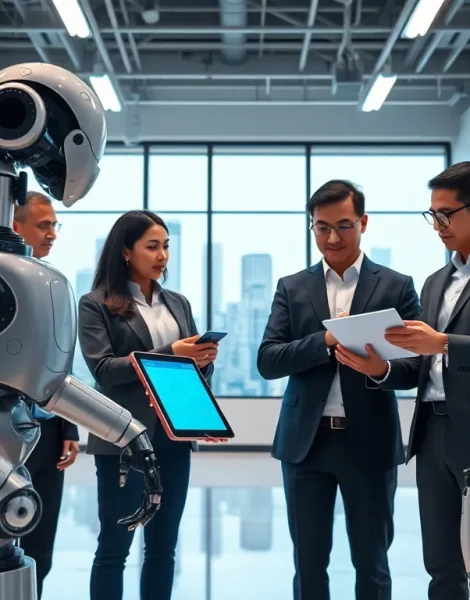
Top robotics innovations are transforming industries at a pace few predicted even a decade ago. From factory floors to hospital operating rooms, robots now perform tasks that once required human hands, often with greater precision and consistency. The global robotics market reached $55 billion in 2024, and analysts project it will exceed $150 billion by 2030.
This growth isn’t just about bigger numbers. It reflects real changes in how businesses operate, how patients receive care, and how people live their daily lives. Whether it’s a collaborative robot working alongside assembly line workers or an AI-powered assistant helping elderly individuals stay independent, top robotics technologies are reshaping entire sectors. Here’s a closer look at the most significant developments driving this transformation.
Table of Contents
ToggleKey Takeaways
- The global robotics market is projected to grow from $55 billion in 2024 to over $150 billion by 2030, driven by adoption across industries.
- Top robotics innovations in manufacturing include collaborative robots (cobots) and automated mobile robots (AMRs) that work safely alongside humans.
- Surgical robots like the da Vinci system have completed over 10 million procedures, while rehabilitation exoskeletons help paralyzed patients walk again.
- Consumer robots such as vacuums, lawn mowers, and delivery bots are bringing advanced robotics technology into everyday life.
- Artificial intelligence, including generative AI and reinforcement learning, is making top robotics systems smarter and more adaptable.
- Humanoid robots and swarm robotics represent emerging frontiers, though safety and ethical considerations remain key priorities.
Industrial Robotics and Manufacturing Automation
Industrial robotics remains the backbone of the top robotics sector. Factories worldwide deploy robotic arms, automated guided vehicles (AGVs), and collaborative robots (cobots) to boost productivity and reduce errors.
Traditional industrial robots excel at repetitive, high-speed tasks. They weld car frames, paint surfaces, and assemble electronics with remarkable consistency. Companies like Fanuc, ABB, and KUKA dominate this space, supplying machines that operate 24/7 without fatigue.
Cobots represent a newer category within top robotics. Unlike their caged predecessors, cobots work safely alongside humans. They handle tasks like machine tending, quality inspection, and packaging. Universal Robots pioneered this market, and their UR series now operates in thousands of facilities globally. Small and medium-sized businesses particularly benefit from cobots because they’re easier to program and more affordable than traditional industrial robots.
Automated mobile robots (AMRs) have also gained traction. These machines move materials through warehouses and production lines without fixed tracks. Amazon’s acquisition of Kiva Systems in 2012 kicked off a wave of investment in warehouse automation. Today, companies like Locus Robotics and Fetch Robotics provide AMR solutions that integrate with existing operations.
The numbers tell the story. The International Federation of Robotics reported that manufacturers installed over 500,000 industrial robots in 2023 alone. Asia leads adoption, with China accounting for more than half of new installations. But North America and Europe are catching up as labor shortages push companies toward automation.
Healthcare and Medical Robotics
Healthcare represents one of the most exciting frontiers for top robotics development. Surgical robots, rehabilitation devices, and pharmacy automation systems are improving patient outcomes and reducing strain on medical professionals.
The da Vinci Surgical System from Intuitive Surgical remains the gold standard in robotic surgery. Surgeons control the system’s arms through a console, performing minimally invasive procedures with enhanced precision. Over 10 million surgeries have been completed using da Vinci systems since their introduction. Competitors like Medtronic’s Hugo and Johnson & Johnson’s Ottava are now entering this market, promising more options for hospitals.
Rehabilitation robotics helps patients recover from strokes, spinal injuries, and other conditions. Exoskeletons from companies like Ekso Bionics and ReWalk enable paralyzed individuals to stand and walk. These devices don’t just improve mobility, they also reduce secondary health complications that come from prolonged sitting.
Pharmacy robots handle medication dispensing with accuracy rates exceeding 99.9%. They count pills, package prescriptions, and manage inventory. This frees pharmacists to spend more time counseling patients instead of filling bottles.
Disinfection robots gained prominence during the COVID-19 pandemic. Companies like Xenex and UVD Robots developed machines that use ultraviolet light to sanitize hospital rooms. Many healthcare facilities have kept these systems as permanent fixtures.
Top robotics in healthcare isn’t limited to hospitals. Home care robots assist elderly and disabled individuals with daily activities. These range from simple medication reminders to more sophisticated companions that monitor vital signs and alert caregivers to potential problems.
Consumer and Service Robots
Consumer and service robots bring top robotics technology into everyday life. These machines vacuum floors, mow lawns, deliver packages, and even provide companionship.
iRobot’s Roomba remains the best-known consumer robot. The company has sold over 40 million units since launching the product in 2002. Today’s models use cameras and sensors to map homes and avoid obstacles. Competitors like Roborock, Ecovacs, and Shark offer alternatives with similar capabilities.
Lawn care robots are following a similar trajectory. Husqvarna’s Automower and other brands now handle grass cutting without human intervention. These machines work quietly, operate on schedules, and return to charging stations when their batteries run low.
Delivery robots are appearing on sidewalks and streets. Starship Technologies operates thousands of small delivery bots on college campuses and in select cities. They transport food, packages, and groceries directly to customers. Larger autonomous delivery vehicles from Nuro handle grocery runs and pharmacy deliveries in several U.S. markets.
Restaurant robots have become more common too. Some establishments use robots to deliver food from kitchen to table. Others employ machines that cook specific dishes, think burger-flipping robots or automated pizza makers. These systems address labor shortages while maintaining consistency.
Social and companion robots serve emotional needs. Sony’s Aibo robotic dog, now in its latest generation, provides pet-like interaction without allergies or feeding requirements. Robots like ElliQ help seniors stay connected and mentally active through conversation and games.
Top robotics in the consumer space continues to expand as prices drop and capabilities improve.
Emerging Trends in Artificial Intelligence and Robotics
Artificial intelligence is accelerating top robotics capabilities in ways that seemed like science fiction just years ago. Machine learning, computer vision, and natural language processing are making robots smarter and more adaptable.
Generative AI has entered the robotics conversation. Companies are exploring how large language models can help robots understand verbal instructions and adapt to new situations. Google’s RT-2 demonstrates how vision-language models can translate commands into robotic actions without specific programming for each task.
Reinforcement learning allows robots to improve through trial and error. Instead of programming every movement, engineers set goals and let robots discover optimal approaches. This technique has proven especially valuable for manipulation tasks where traditional programming falls short.
Cloud robotics connects individual machines to shared computing resources. Robots can offload heavy processing to remote servers and download new skills as they become available. This approach reduces hardware costs while expanding capabilities.
Humanoid robots have captured public attention. Tesla’s Optimus, Boston Dynamics’ Atlas, and Figure’s Figure 01 represent ambitious attempts to create general-purpose robots with human-like form factors. These machines face significant engineering challenges, but progress has been steady.
Swarm robotics takes inspiration from insects. Instead of deploying one powerful robot, researchers develop groups of simple machines that coordinate to accomplish tasks. Applications include search and rescue, agriculture, and environmental monitoring.
Top robotics development increasingly focuses on safety and ethics. As robots become more autonomous, questions arise about accountability, job displacement, and privacy. Industry groups and governments are working to establish guidelines that balance innovation with responsible deployment.


